Is Pet Therapy a Good Option for Memory Care?
If you’re caring for a parent or loved one with dementia, you have probably noticed how even small changes in environment or routine can cause them stress. Restlessness, anxiety, and withdrawal can be daily occurrences. Families often focus on safety, meds, or activities when thinking about memory care, but emotional comfort is equally important.
This is where pet therapy fits in. Not in the way that we will simply have animals available, but in the form of structured programs where trained therapy animals and handlers interact with residents. If done well, these visits can significantly contribute to calm, joy, and connection.
This article will provide an overview of pet therapy, how it can help emotional, physical, and social well-being, some challenges to consider, and what questions families should ask when looking at communities that utilize pet therapy.
What Pet Therapy Looks Like in Memory Care
Pet therapy in memory care isn’t just about pets being present in a building. Pet therapy is a structured process that involves trained animals, most often dogs and sometimes cats, and occasionally rabbits or birds that are brought into the memory care setting for interaction with residents. All sessions are facilitated by handlers who are trained to support both the animals in their work and the people they are visiting.
The intention is not to over-stimulate residents but to provide another layer of calm and positive engagement. Some residents may want to stroke a dog’s fur while others may want to simply watch and smile. The animals involved in therapy relationships are purposefully selected based on their temperaments, and visits to the community usually occur at the same time each week or for the same length of time, so residents have something consistent they can look forward to.
Unlike pet ownership, which comes with responsibilities, pet therapy is about shared comfort with none of the burdens.
Emotional and Cognitive Benefits of Pet Therapy
One of the very first ways that pet therapy can make a difference is emotional relief. Petting a dog, or even just being within a few feet of an animal, can decrease anxiety and agitation, and provide a sense of safety. For someone who struggles to find words, an animal can establish a connection without the burden of language.
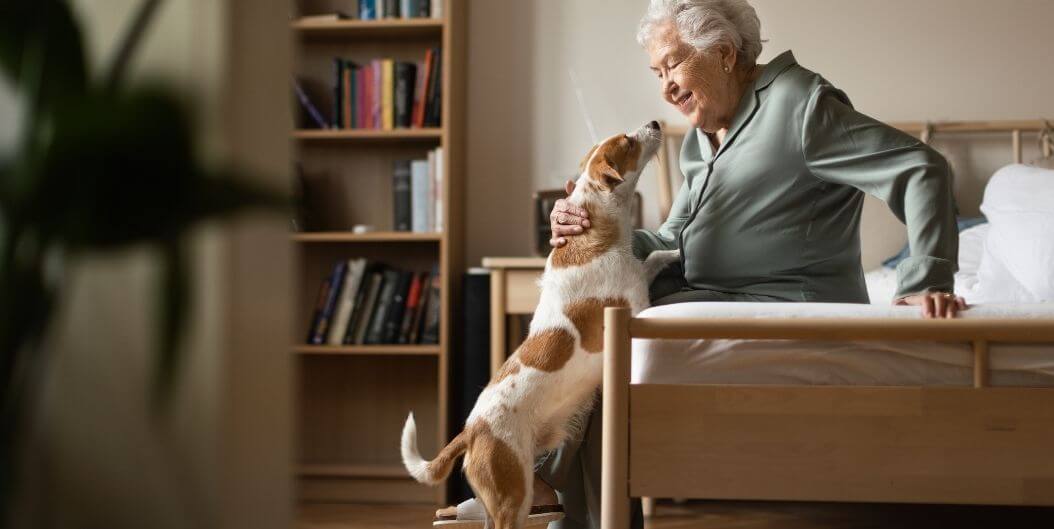
These sessions often spark moments of recognition. A resident who has not spoken for days might smile, or laugh, or even hum with their lips, while petting a dog. Other residents may recall a memory of their pet from when they were a child. These are the moments that matter. They show family members that their loved one can still feel joy and connection, despite not being able to express it as analytically and fluently as in the past.
Physical Benefits for Seniors With Dementia
The benefits of pet therapy are not just emotional. They are also physical. Touching or brushing an animal encourages gentle movement of the arms and hands. Some sessions may include short, accompanied walks with a therapy dog and its handler.
There is also a calming effect on a biological level. Research shows that interacting with an animal can lower blood pressure and heart rate and relieve muscle tension. These subtle changes may not be dramatic, but over time, they help the body feel less stressed and more at ease. For seniors with dementia who may already be frail, small steps toward comfort and relaxation make a big difference.
Social and Community Connection Through Animals
Pet therapy usually happens in group settings. When a dog comes in, the residents become engaged, together. The dog can serve as a vehicle for shared stories; neighbors sharing stories about their pets, or two neighbors laughing about what a dog did.
These moments are very common experiences. Sometimes residents continue to talk about the pet after the session, so the engagement continues to create connections that may not have existed before. Family members who visit when a pet is present tend to feel more comfortable because pets act as natural icebreakers.
In communities where loneliness can be a risk, this type of interaction creates a bond, both with the pet and with other people.
Potential Challenges and How Communities Address Them
Pet therapy is not a one-size-fits-all approach. Some residents fear animals, some may be allergic, and some residents simply may not want to attend. Good programs are flexible. Nobody truly has to participate if they don’t feel like it.
Instead, therapy sessions are offered as an option, with staff ensuring that only those who wish to participate are present.
Cleanliness and safety are also a priority. Therapy animals are carefully groomed and temperament tested.
Handlers are trained to determine when it is time to stop the activity, as well as to assess an animal’s and or the resident’s comfort level about the activity in real time. Pet therapy communities work consciously to make the experience as safe, calm, and voluntarily engaging as possible.
The key balance is that pet therapy should enrich life, not become another source of stress.
What Families Should Ask About Pet Therapy Programs
If you are visiting a care community and are curious about pet therapy, some questions may help:
- What kinds of animals are used, and how often do they come to visit?
- Are the therapy animals certified, and are they always accompanied by trained handlers?
- How does the community respect residents who do not want to take part?
- Can families take part in the therapy session?
These questions can help you assess whether a program is formal and intentional or whether visits are occasional and casual. You should expect direct answers that clearly show planning rather than vague promises.
Curious if Pet Therapy Really Helps in Memory Care? See for Yourself at Lynridge of Waco
Pet therapy at Lynridge of Waco Memory Care goes beyond a one-time event; instead, it is part of an overall approach to emotional and social wellness. Certified therapy animals visit regularly, with trained handlers and staff support.
Residents can choose group visits or quieter individual visits, with family members able to join the visits to make it a shared experience. The community provides safety, comfort, and dignity for the residents, and therapy is always optional, not obligatory.
For residents with dementia, the visit is not about having a friendly dog or cat nearby. It creates moments of connection and comfort, and perhaps a moment of recognition on a difficult day.
When your loved one is living with dementia, there is a tendency to focus on safety, medication, and daily living care, but emotional wellness is just as important as physical well-being. Pet therapy can be a gentle intervention that brings comfort, joy, and connection to the residents.
The best way to see how our community brings pet therapy into our memory care model is to schedule a tour and come for a visit to Lynridge of Waco. Meet our staff, observe a pet therapy session, and see how therapy animals provide comfort and connection in day-to-day life.